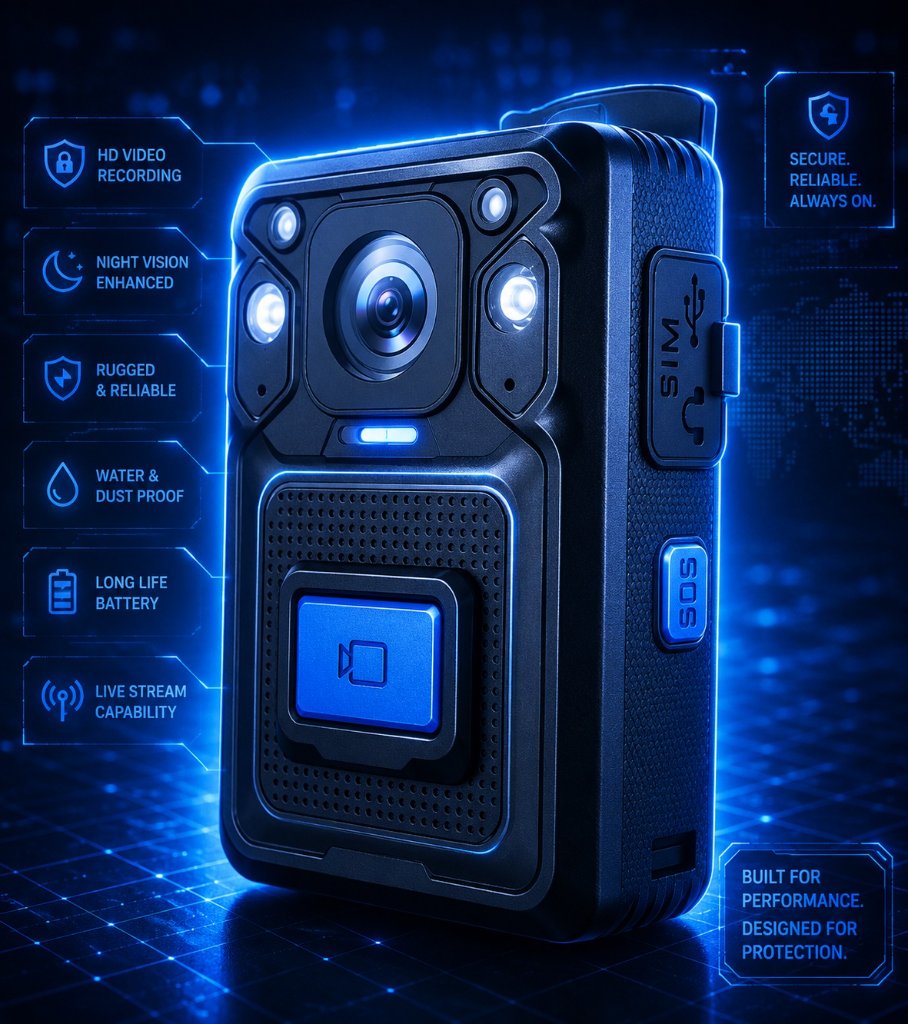
The Problem Bodycams Solve
Traditional CCTV systems capture what happens in a fixed area. But security guards operate in dynamic environments — patrolling sites, responding to incidents, and moving through locations that cameras cannot cover. When an incident occurs in the field, the evidence gap is critical.
Body-worn cameras close that gap by capturing exactly what the guard sees, when they see it, from their perspective.
Key Capabilities That Matter
Evidence Integrity
Bodycams like RapidCam use military-grade AES encryption and embedded anti-tamper memory. This means footage cannot be altered, deleted, or disputed. The chain of custody is preserved from the moment of capture — a critical requirement when footage is used in disciplinary hearings, legal proceedings, or client compliance audits.
Operational Flexibility
Bodycams offer multiple recording modes — voice-only, snapshot, and full audio-video — giving guards the flexibility to capture evidence appropriate to the situation without constantly recording video. This extends battery life, reduces storage requirements, and ensures the guard has the right tool for each scenario they encounter on patrol.
Emergency Response
Live bodycams include Push-to-Talk over Cellular (PoC) and dedicated SOS panic buttons. When a guard is under duress, the control room can see and hear what is happening in real time and dispatch assistance immediately. This transforms the control room from a passive monitoring centre into an active response coordinator.
Beyond the Camera
The real transformation is not in the hardware but in what the footage becomes — actionable intelligence. With AI-powered search and analysis through platforms like AIMSS, security operations can:
- Search footage by time, location, and keyword
- Identify patterns and recurring issues across multiple sites
- Generate incident reports automatically from recorded evidence
- Provide verifiable proof for client compliance audits and SLA verification
Choosing the Right Bodycam System
When evaluating body-worn camera solutions, security operators should consider several factors that directly impact operational effectiveness. Battery life is paramount — a bodycam that dies mid-shift creates evidence gaps exactly when coverage matters most. Look for devices that deliver a full 12-hour shift on a single charge.
Storage and retrieval architecture matters equally. Footage is only valuable if it can be found quickly when needed. Cloud-based evidence management, integrated with your existing security platform, eliminates the friction of manual file handling and ensures evidence is accessible to authorised personnel from any location.
Durability is non-negotiable for the security environment. Devices should be rated for impact resistance, water exposure, and the daily physical demands of guard work. A bodycam that fails in the field is worse than no bodycam at all — it creates a false sense of security coverage.
The Bottom Line
Bodycams are not a replacement for CCTV — they are a complementary layer that fills the evidence gap in the field. For security companies, they deliver higher accountability, stronger evidence, faster incident response, and demonstrable compliance, all in a device that the guard already wears.